
Make This Year Your Caterpillar Year
On caterpillar gardening

Have you ever looked—I mean really looked—at a caterpillar? They are wonderful and fascinating insects.
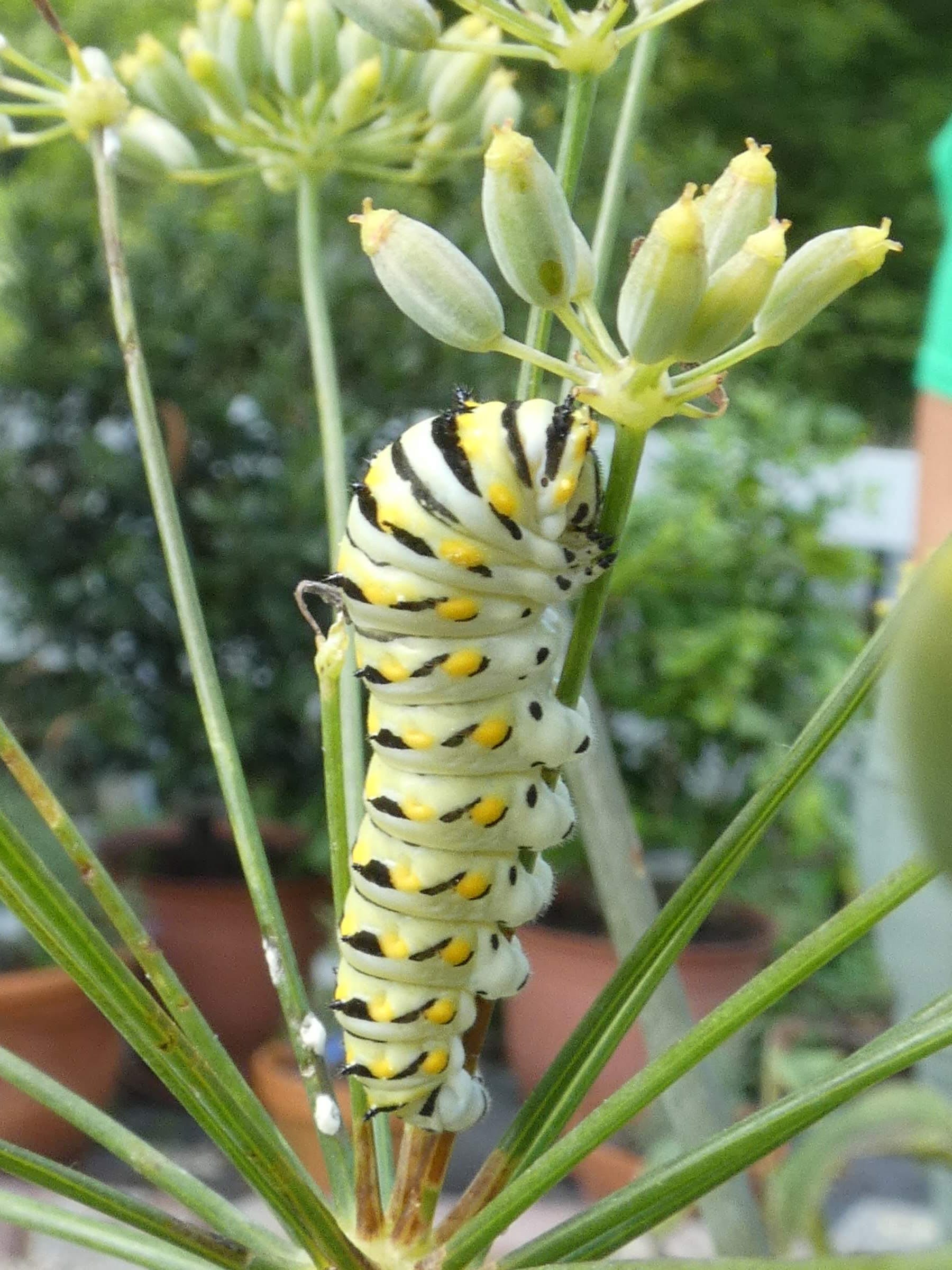
A caterpillar represents the larval stage of growth for butterfly and moth species. It spends its existence eating and expanding, often shedding its skin several times as it moves through a series of instars—or phases—before transforming itself into a pupa (chrysalis for butterflies, cocoon for moths). And just as a caterpillar’s entire existence involves growth and transformation, so too does a garden that shelters and feeds a diversity of wildlife.
Because caterpillars focus so much on growth, they have to be pretty soft and squishy to allow for rapid expansion. Caterpillars eat the leaves, flowers, and stems of their host plants. They can’t fly, and they can’t move fast. To predators, they are the perfect morsels of protein, fat, and carbohydrates in an easy-to-catch package. Most songbird species (even seed- and insect-eaters) rely solely or heavily on caterpillars to feed their young. And many other animals, from mammals, amphibians, and reptiles to wasps, ants, and spiders, eat caterpillars.
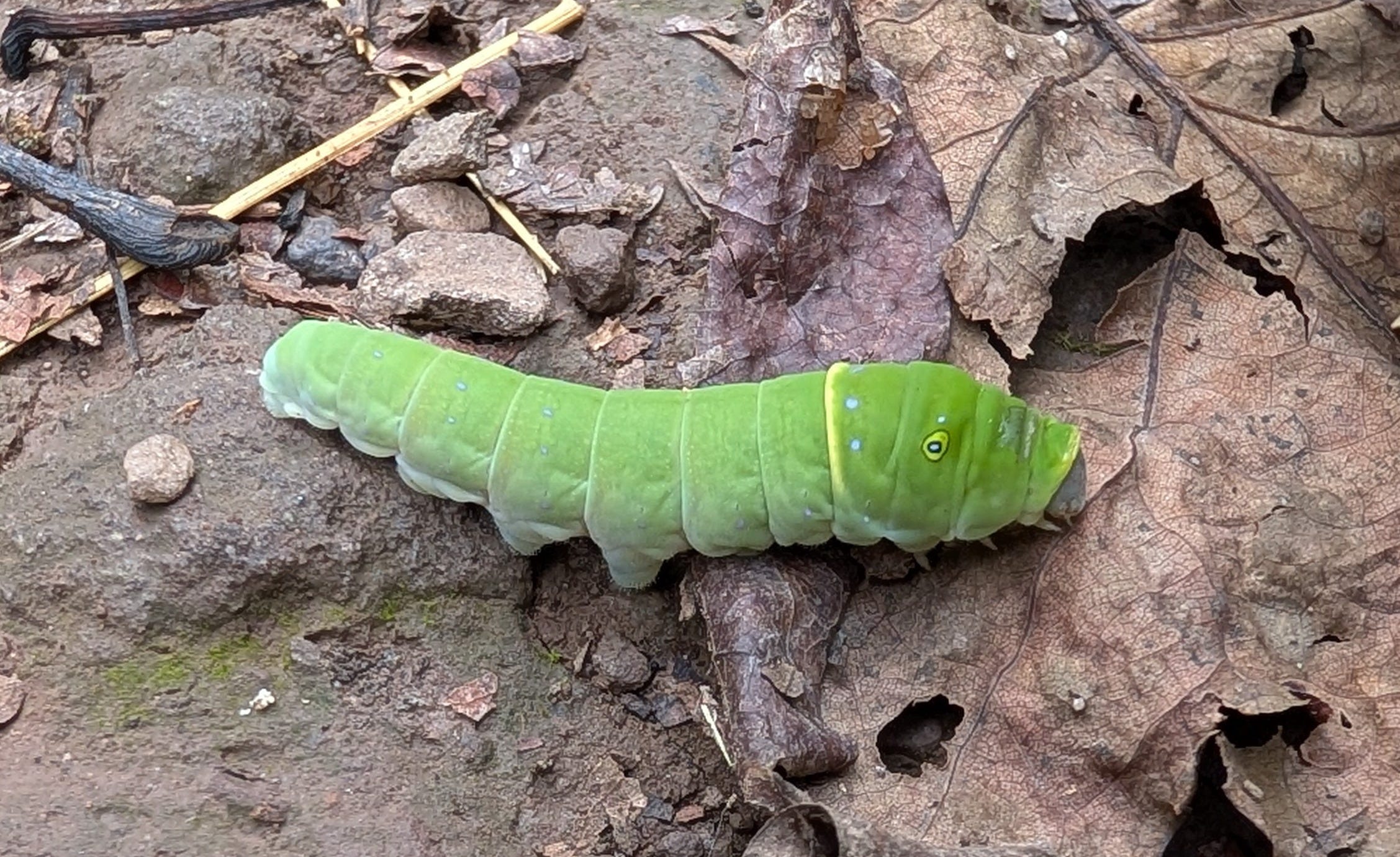
Caterpillars are cool in their own right, and they are also a major base of the food web. So this year, why not make it your caterpillar year, centering your gardening endeavors around attracting and supporting them? In doing so, I guarantee that you’ll increase biodiversity and an abundance of wildlife on your site. Meanwhile, like a caterpillar, you’ll also expand and transform yourself as a wildlife gardener.
This year, make your garden a place where caterpillars (and you) can live, eat, hide, transform, and become.
Falling in love with caterpillars
Raise your hand if you read The Very Hungry Caterpillar by Eric Carle as a child. Me too! It is a fun and simple story that relates the life cycle of a butterfly from egg to caterpillar to pupa to adult. Now, we can quibble about the Very Hungry Caterpillar’s diet, which included such foods as lollipops, pickles, and pizza (none of which real caterpillars eat), and the fact that Carle called its pupal stage a cocoon when it should have been a chrysalis, but still. It’s a marvelous book that taught many of us as children to love caterpillars. It also introduced the process of metamorphosis.
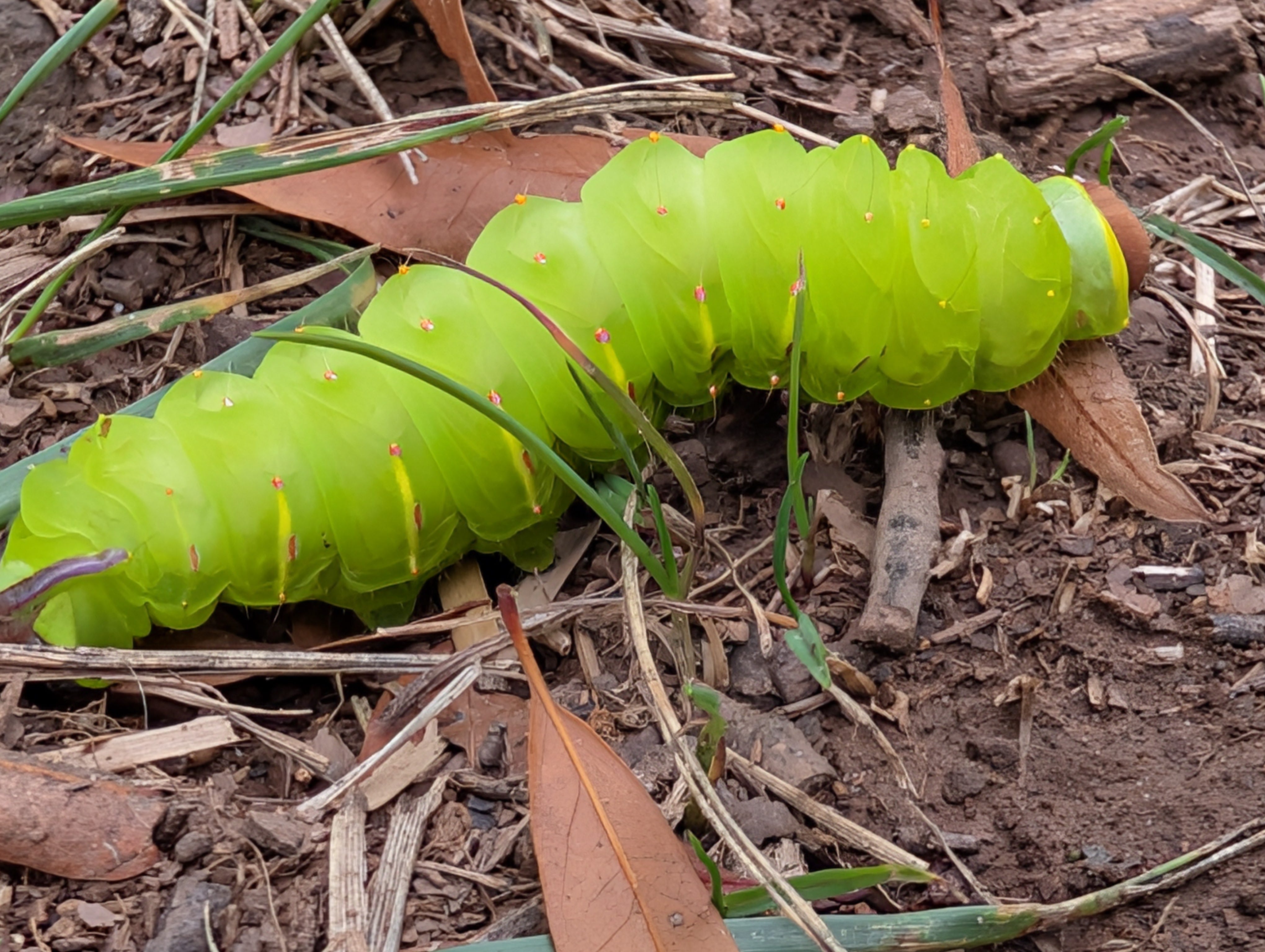
Caterpillars make wonderful ambassadors of the insect world. It’s easy to be captivated by their colors, form, and rippling locomotion. They tickle when they walk on our arms, and they don’t bite, so they are more approachable than some other insects. And there are so many sizes and shapes!
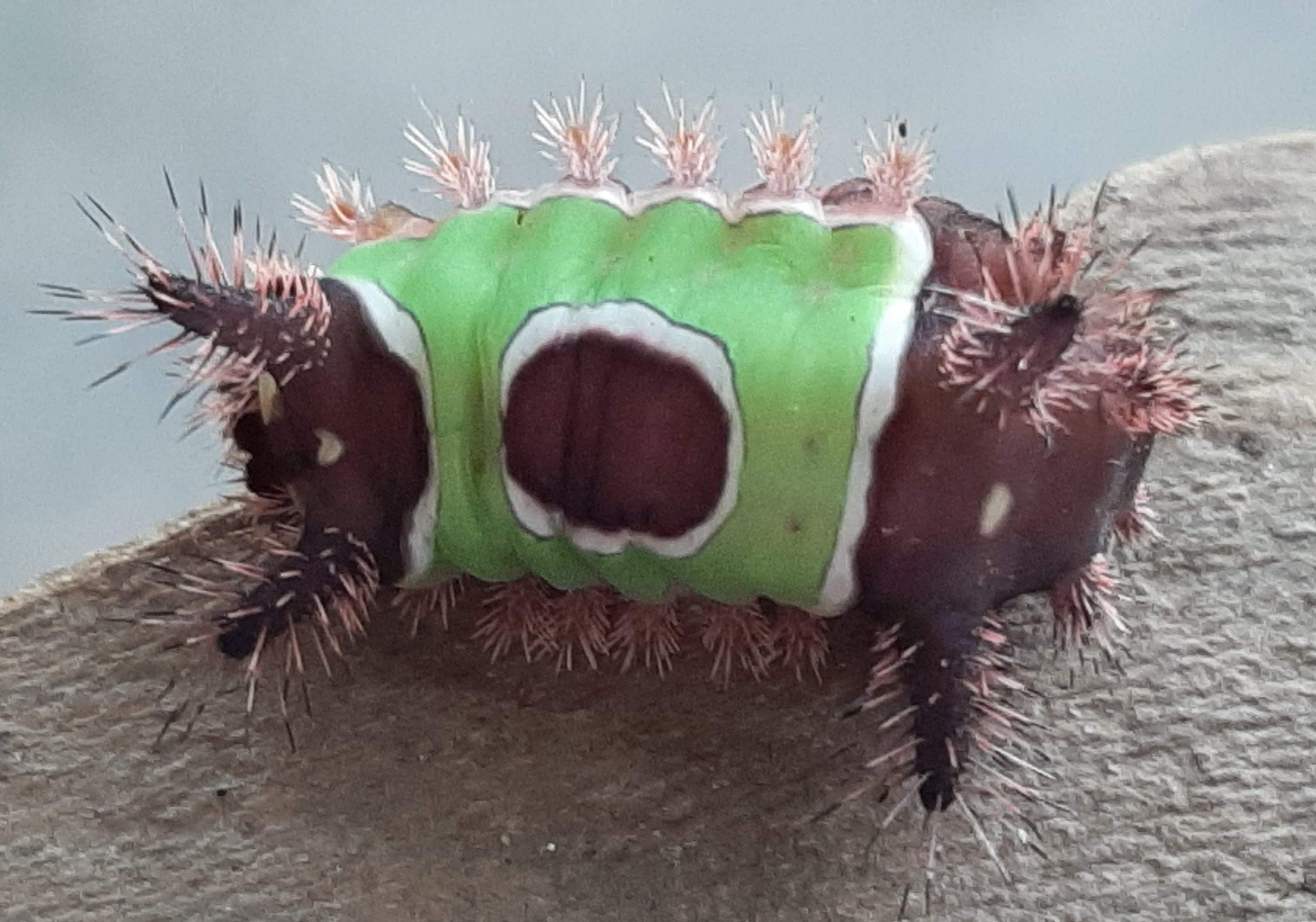
I should mention that some hairy or spiny caterpillars CAN cause rashes or carry toxins that sting and burn, so be wary about picking them up with your bare hands. The saddleback caterpillar shown below, for instance, is one you do not want to touch. Its toxic spines release a painful venom into the skin that can spread to nearby lymph nodes and cause lingering symptoms if not treated. It’s best not to handle any caterpillar with spikes or “fur.” Love them from a safe distance!
A caterpillar’s feast - Planting, part 1
The more you learn about caterpillars, the more interesting they get. The first and most important thing to know about them from a gardener’s standpoint is that most of them are not only very hungry, but also very picky eaters—unlike the apocryphal one in Eric Carle’s story. Most butterfly and moth species found in eastern North America are oligophagous, meaning they co-evolved with particular plants and can only eat a few closely related species. Some are monophagous, like monarchs which can only eat species in the Asclepias (milkweed) genus. Those plants are called larval host plants because they host the larval form (caterpillar) of the butterfly. So, it’s those larval host plants we gardeners need to get to know and appreciate in order to attract caterpillars.
It’s also very important to understand that certain plant species play an outsized role in hosting larvae. They are the hostesses with the mostesses. Among such “keystone species,” it pays to become familiar with the top four or five in each of the following categories, because according to caterpillar rockstar researchers Desiree Narango and Doug Tallamy, just 14% of native plant species in North America support 90% of our lepidopteran species.1
Trees
Oak (Quercus)
Willow (Salix)
Cherry (Prunus)
Birch/poplar (Betula/Populus)
Hickory (Carya)
Shrubs
Blueberry (Vaccinium)
Dogwood (Cornus - now Swida/Benthamidia)
Viburnum (Viburnum)
Hazelnut (Corylus)
Herbaceous
Goldenrod (Solidago)
Aster (Symphyotrichum/Eurybia)
Sunflower (Helianthus)
Milkweed (Asclepias)
Each genus listed above hosts dozens to hundreds of moth and butterfly species. Oaks alone support over 550 caterpillar species. This is part one of what to plant - and if you plant it, the caterpillars will come!
A caterpillar’s lifestyle
Imagine how small a caterpillar must be to emerge from an egg. It’s tiny! But it grows fast by eating full-time.
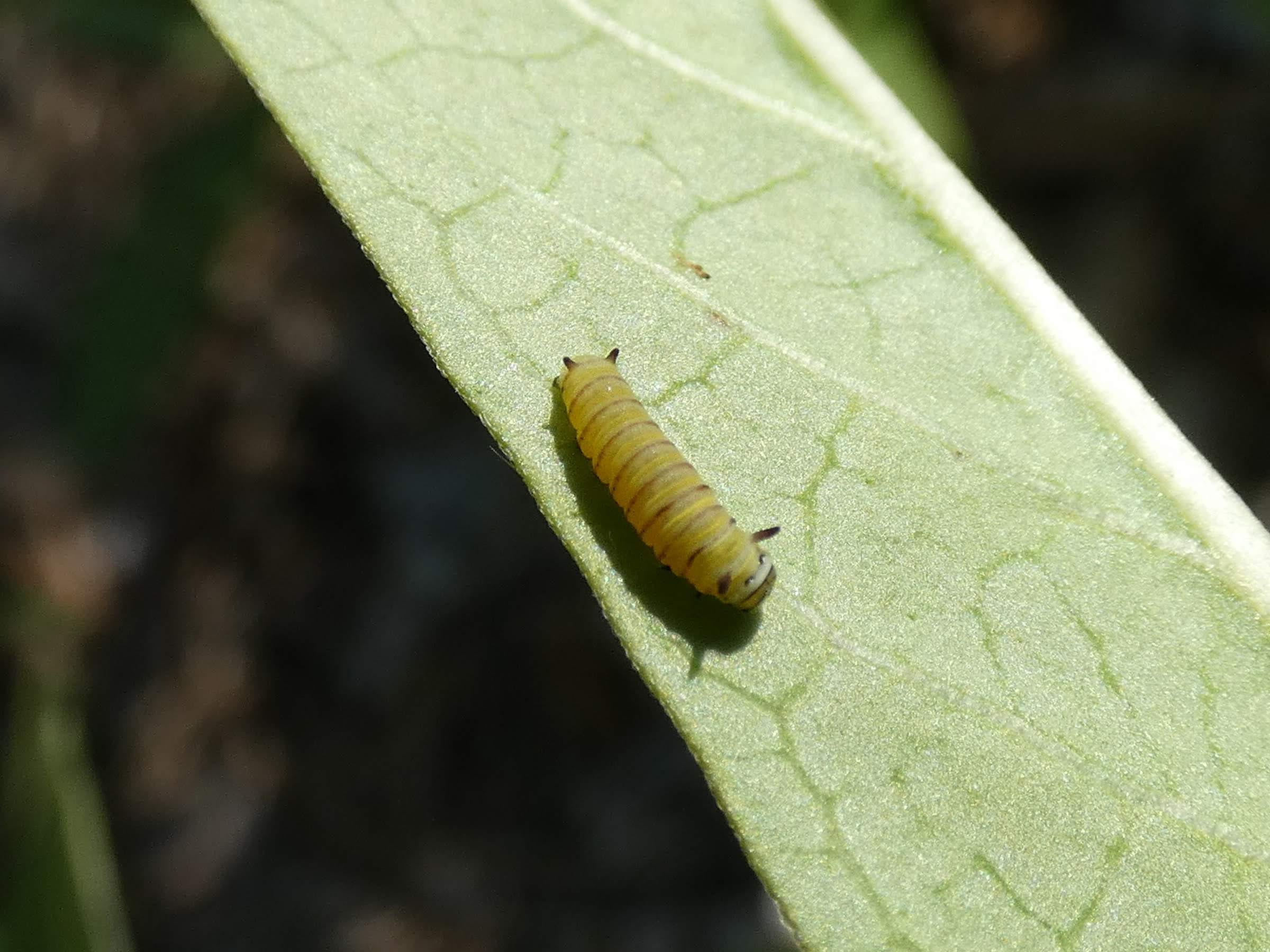
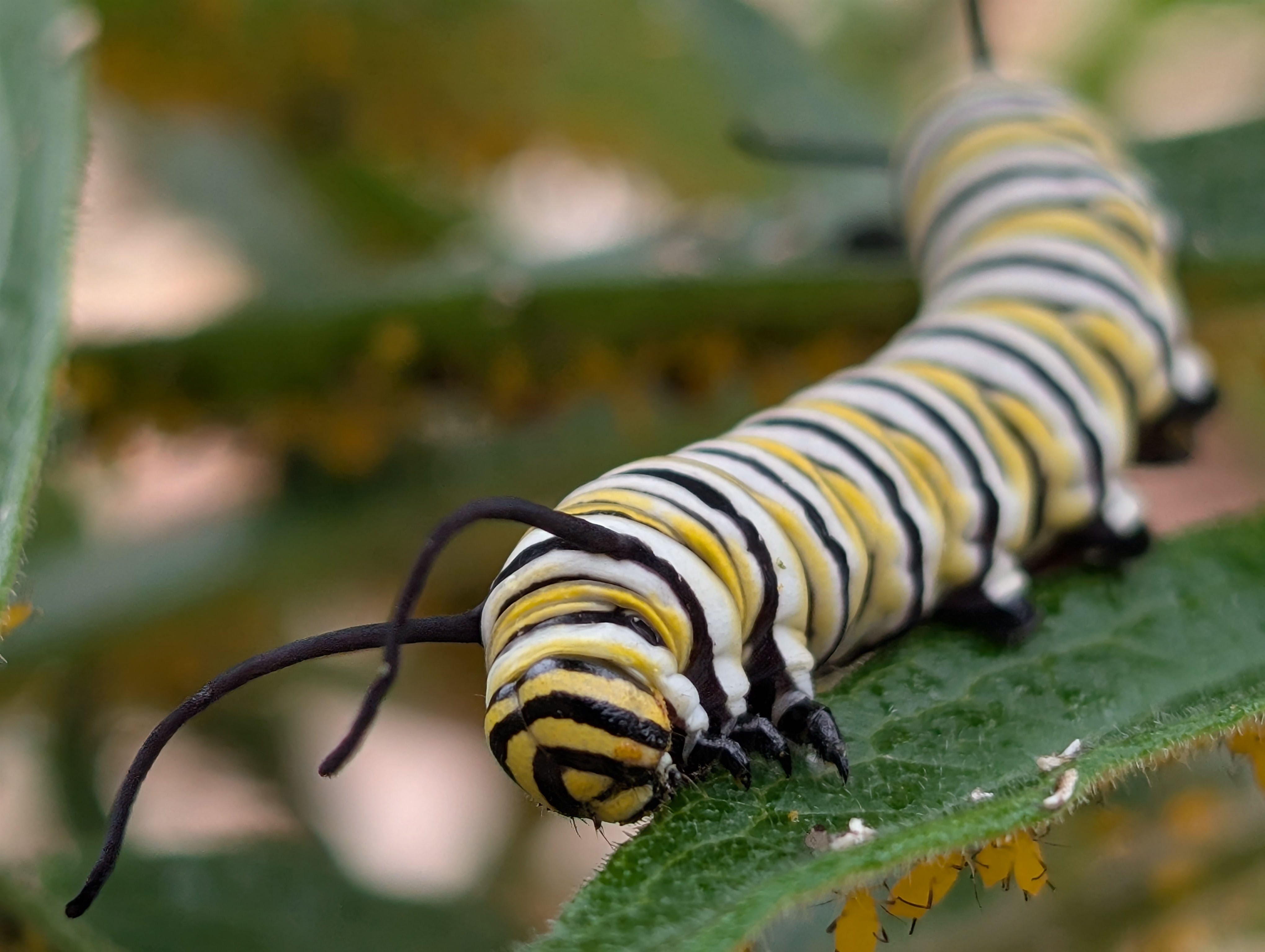
Caterpillars are steady and insatiable eaters. They eat and grow extremely quickly. Monarch caterpillars, for example, spend 13 to 19 days in caterpillar form, progressing through five instars. In the process, they increase their mass by 2,000 times!
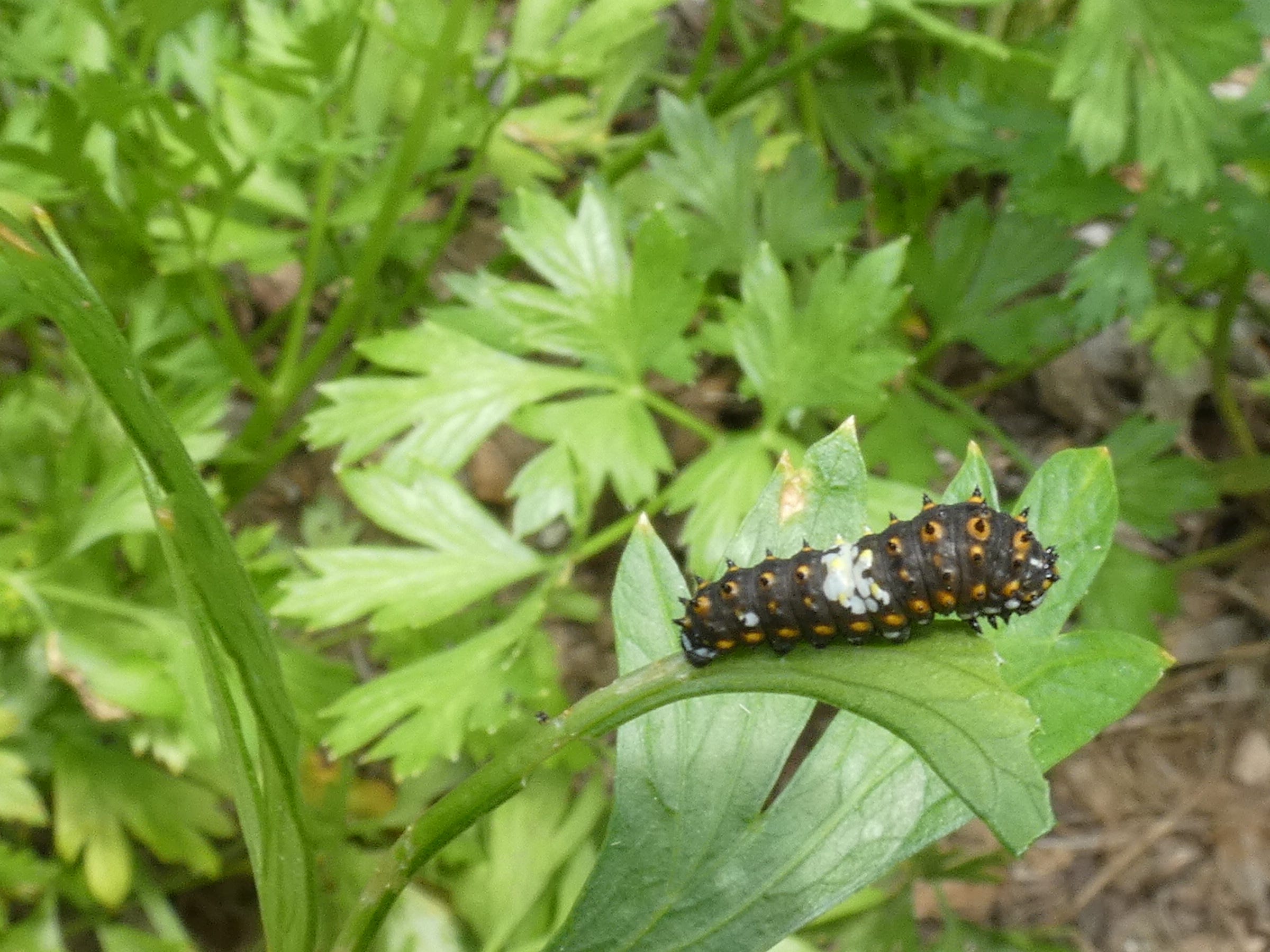
Some caterpillars survive by standing out; others by blending in. And some impersonate bird poop. Black swallowtail caterpillars exhibit “bird poop” markings during their early instars to fool predators:
As they grow larger and molt into larger instars, they become more brightly colored:
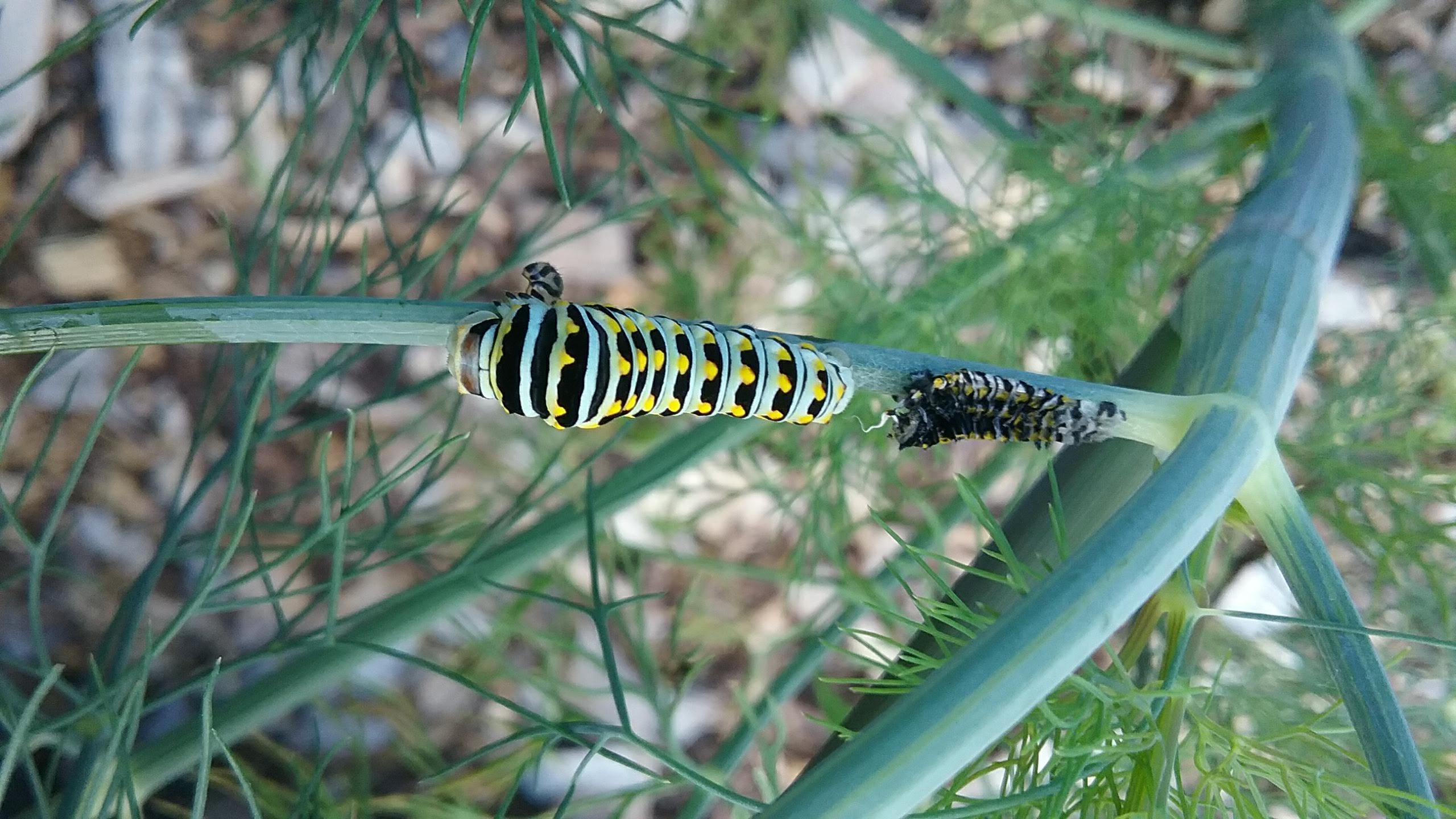
Once you notice a molting caterpillar, it’s easier to understand that its external surface really is an exoskeleton that has to be shed in order for the caterpillar to expand!
Transformation
After they have eaten all that they can, concentrating fats, proteins, and carbohydrates in their squishy bodies, caterpillars are ready to move from larva to pupa. Butterflies form a chrysalis, which is a pod-like structure with a hard “candy” shell. Moths weave cocoons out of silk. The absolutely incredible thing about metamorphosis is that these creatures completely change their form and structure when moving from stage to stage. They essentially melt into goo—even their organs dissolve and reform!—and then restructure as the next version of themselves. Check out this monarch’s pupal transformation:


Many happy butterflies - Planting, part 2
The second way to attract and support caterpillars is to plant the flowers that draw butterflies and moths to feed on their nectar. The adults, in turn, will lay more eggs on your larval host plants. It’s all a cycle without end or beginning. So you need to connect it up to keep the flywheel spinning.
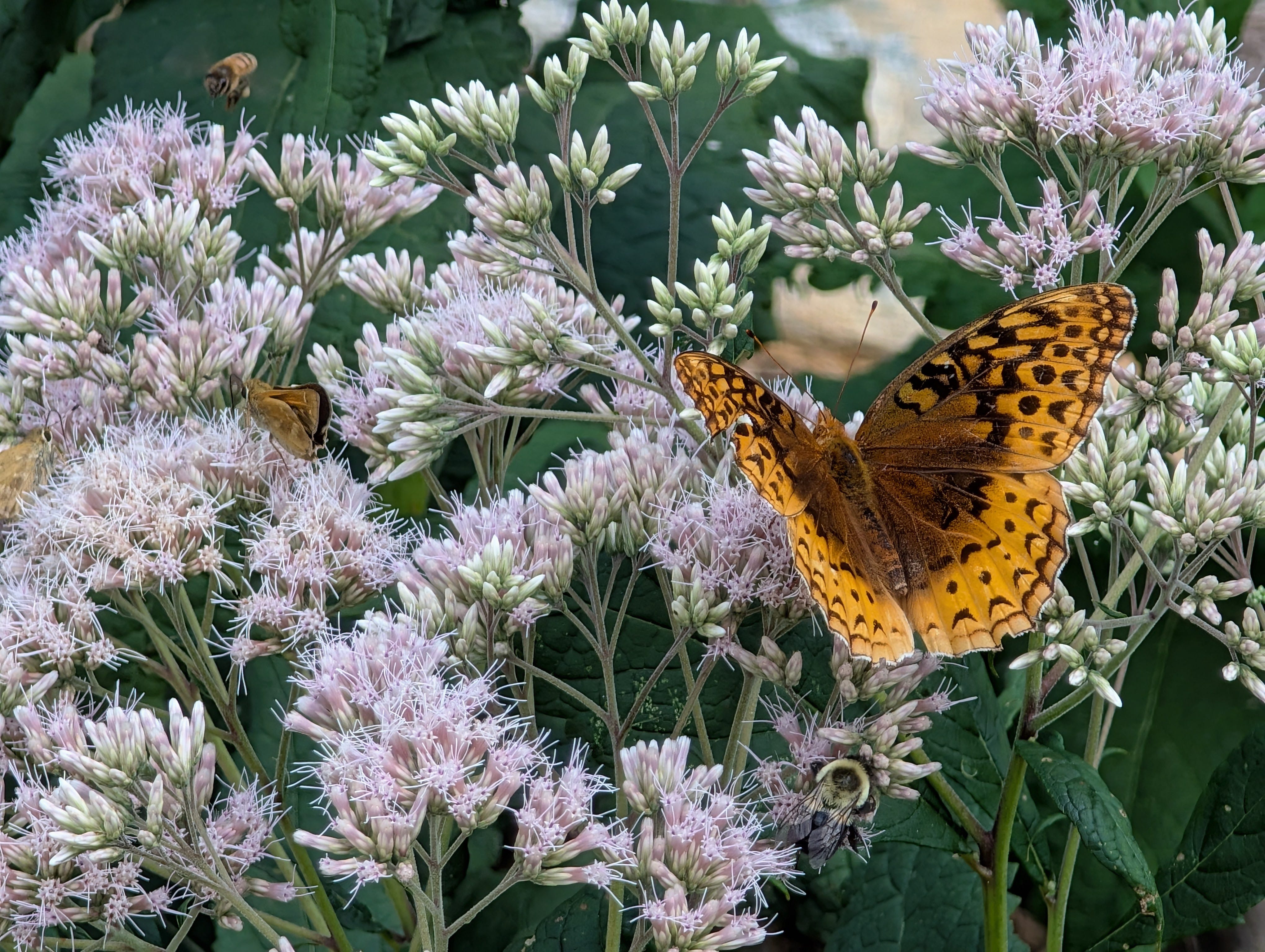
Many gardeners know to plant flowers that attract butterflies, but they neglect to plant for the caterpillars. Sometimes the plants are one and the same, like milkweeds, which not only host caterpillars but feed lots of adult insects with their pollen and nectar. It’s best to plant an array of natives in a layered planting to get the full circle caterpillar garden going strong.
Position a keystone species as an anchor - choose one of the species above depending on the space you have. Then fill in around it with masses of larval host and nectary plants. The more you can plant multiples of each species, the better. There are a few reasons for this: first, a larger grouping of the same plant becomes a visual target for adult insects flying around. They’ll see your patch and land on it more readily. Second, it reduces the energy required of the insect as it feeds or lays eggs if it only has to hop from one plant to another nearby. Third, the more you have, the more they can withstand the herbivory of the caterpillars. It’s always a little tough to watch your star milkweed plant get eaten down to stubs by too many caterpillars! Like trying to feed an entire kindergarten with one cupcake. And finally, masses also appeal to human eyes, giving a sense of order and balance more than singleton plants dotted here and there.
One more point has to do with creating “soft landings,” which refers to the vegetation and leaf litter beneath a tree. Many butterflies and moths overwinter on the ground in various life stages (egg, larva, pupa, and even adult), and they need the protection that leaves and duff afford. So make sure to underplant any trees with herbaceous plants and groundcovers, and don’t trim, rake, or blow away the fallen leaves in the fall. Otherwise you’ll be interrupting the insect life cycle and wiping out a whole generation of creatures before the next year can begin again.
**Quick note - this is getting too long for email because I can’t stop myself from sharing so many caterpillar pictures, so if it is cut off, please click below to get to the juiciest part: useful species lists and guides for planting your caterpillar garden**
Looking for caterpillars
If you want to get to know your caterpillars, it’s time to do some doting! Head out to your garden and peek under leaves. Kneel down and lift up some duff. Carefully inspect stems, and look for leaf damage during the growing season.
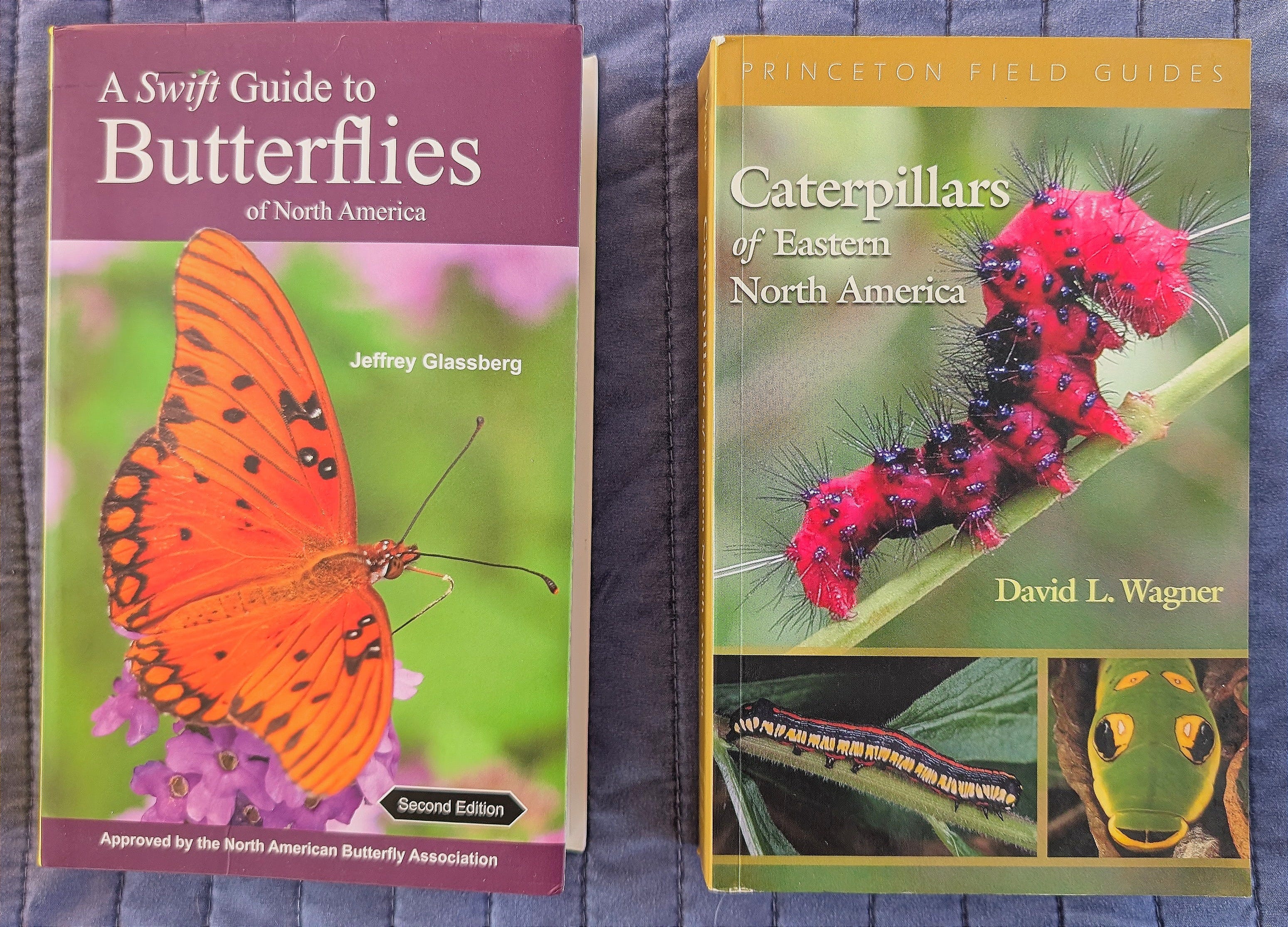
If you’re in need of identification help, I highly recommend these two field guides:
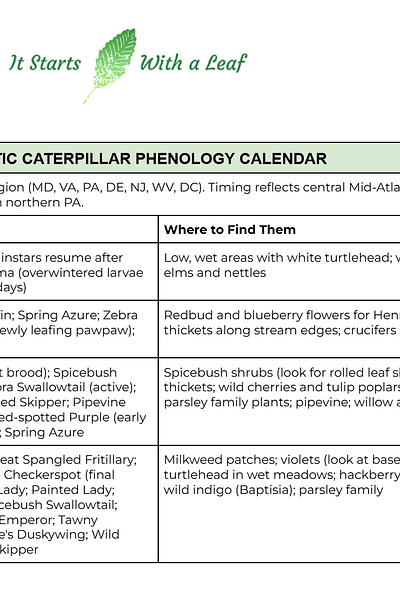
This Mid-Atlantic Caterpillar Phenology Calendar suggests what to expect throughout the year. The time frames are estimates, but this makes for a decent starting point if you happen to be in this region of the eastern United States.
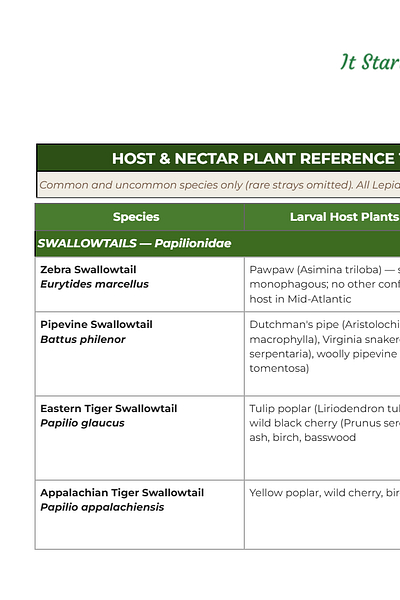
Next, I’ve put together a guide containing butterfly, moth, and skipper species found in our region, along with their larval host plants and favored nectar sources. So if you have a favorite species and you want to attract it, look it up in this table and you’ll find out which plants you’ll need to incorporate in your garden to support it. Of course, you’ll need to work within the constraints of your site and the conditions that you have, but odds are that you’ll be able to figure out a way to bring some frankly very cool insects into your landscape. And that is something to celebrate!
As if that weren’t enough, by planting at least one or two keystone plants, you’ll attract and support all kinds of other interesting creatures that you can get to know. Because, of course, as we discussed earlier, when you bring the caterpillars, you are setting up the chuck wagon for the rest of the food web.
Enjoying your caterpillar year
Just as caterpillars spend their time consuming and expanding, so to does the caterpillar gardener grow and transform through experience. As we read and observe and plant our gardens, we progress through our own instars of understanding, shedding past errors or old beliefs like too-small exoskeletons. The more we learn, the more we recognize how much more there is to learn. This is the promise and the reward of ecological gardening.
So, I challenge to you make this year your caterpillar year. Choose a caterpillar species you are less familiar with. Find out what its host plants and favorite nectar sources are. Work them into your garden or find them in a public garden near you, and see if you notice caterpillars or adults in the vicinity. Let me tell you, the first time you find your prize Violas being decimated by fritillary caterpillars, you are going to jump for joy. And would you ever have expected to do that?!
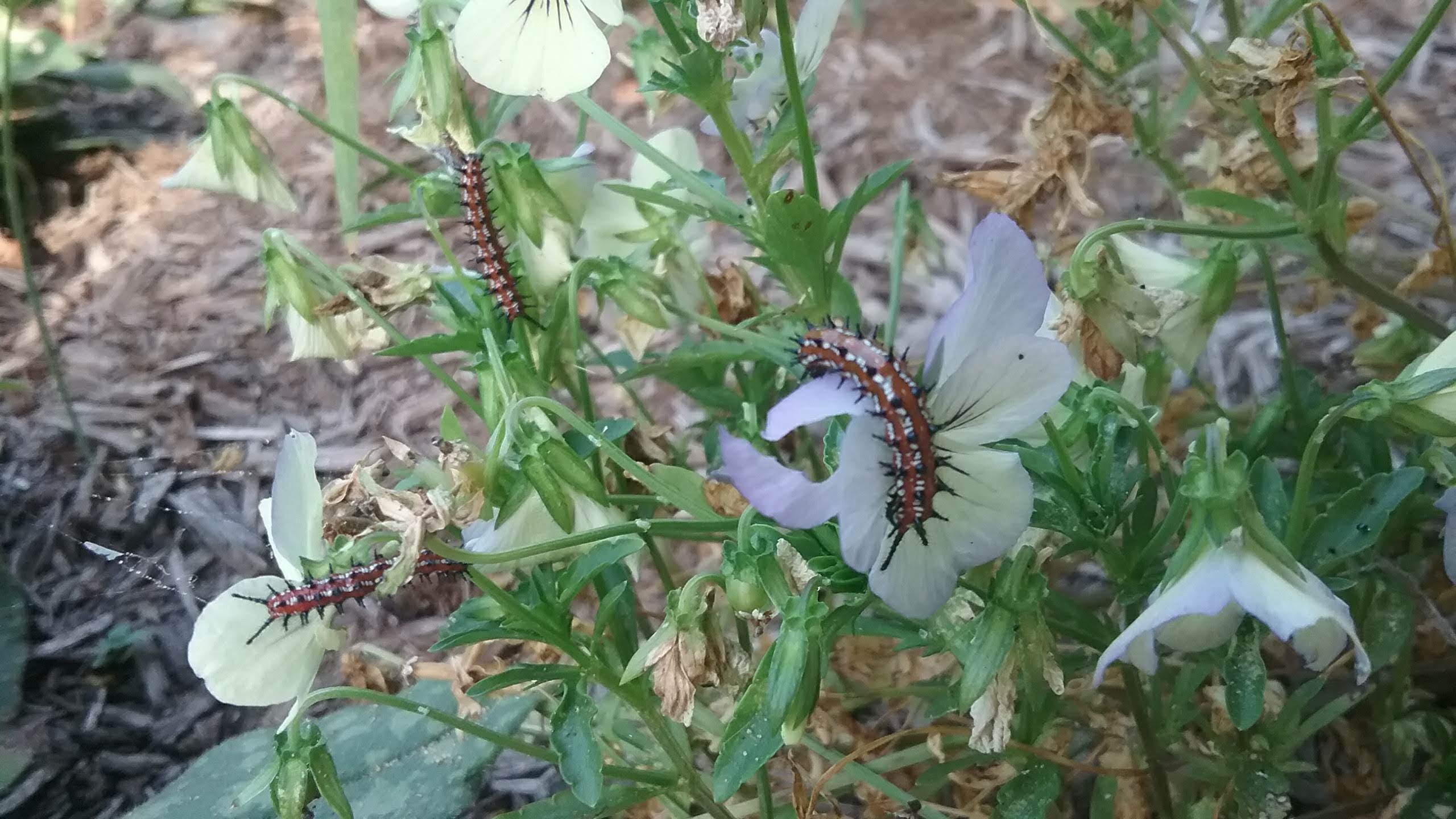
I’d love to hear your stories of caterpillar gardening. Please share your sightings, successes, failures, and observations in the comments! Let’s get caterpillar gardening, shall we?
Narango, D.L., Tallamy, D.W. & Shropshire, K.J. Few keystone plant genera support the majority of Lepidoptera species. Nat Commun 11, 5751 (2020). https://doi.org/10.1038/s41467-020-19565-4
Great informative piece! I watched a black swallowtail appearing to lay eggs on parsley & Zizia aurea in our yard on 3/23/26 & verified she had indeed done so. Fingers crossed they can handle tonight’s low of 32° F & an upcoming 30° F. I was surprised to see one out this early (central VA, near Richmond). We continue to add native plants each year (only been here 2 years). Fingers crossed for American Ladies on our Pearly Everlasting this year.
Great post Vanessa. The way caterpillars can mimic other things is quite remarkable - and when it comes to snakes, few can do better than this sphinx moth caterpillar, https://www.flickr.com/photos/andreaskay/26063436776/in/gallery-126114654@N05-72157723508905144/ !