
What Actually Works: Native Plants for Suburban Dry Shade With Deer Pressure

NOTE: this post is adapted from an article first published on my blog at www.itstartswithaleaf.com.
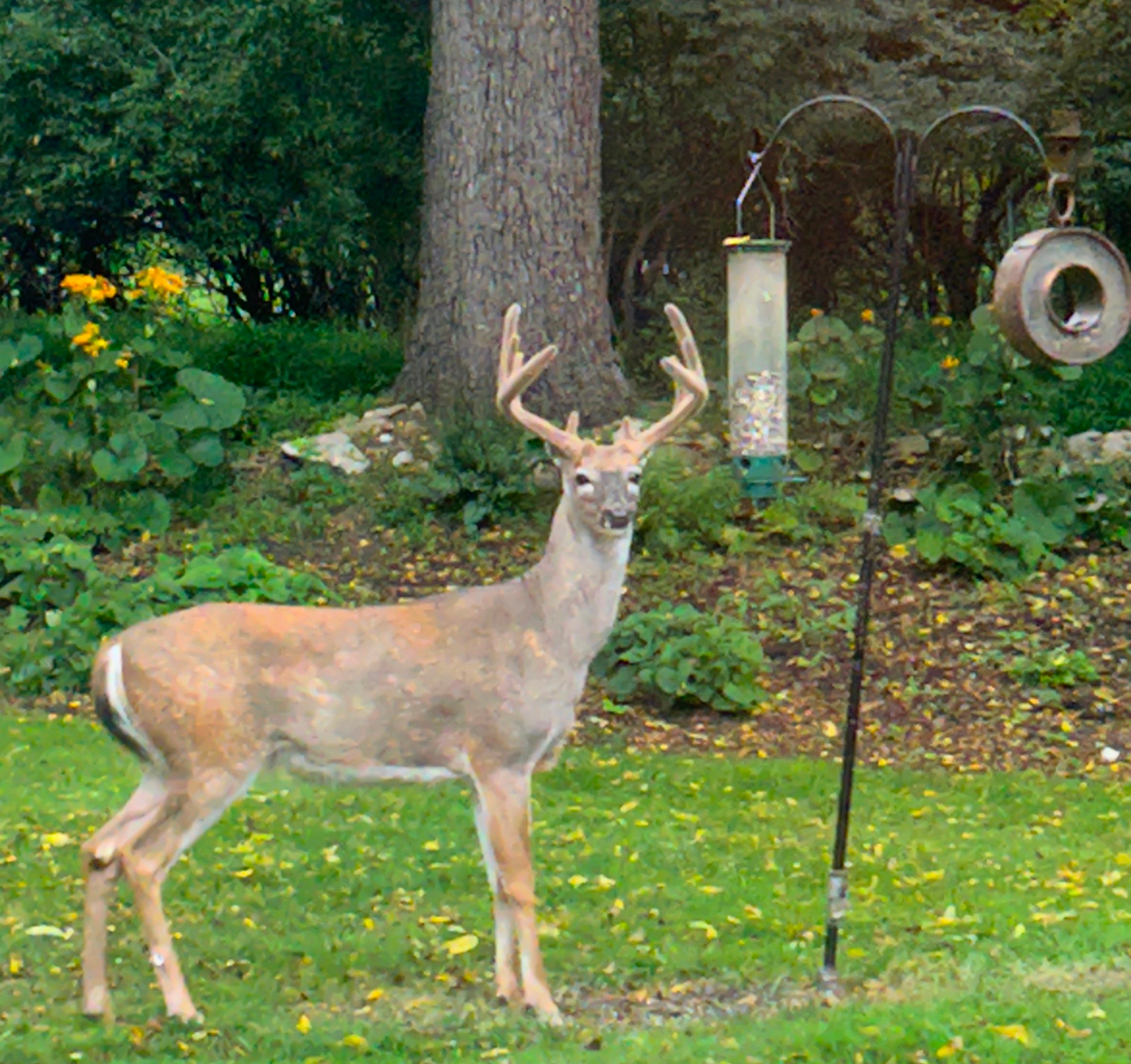
Let’s get our hands dirty and talk about a conundrum many gardeners struggle with: what to plant under trees where it’s dry, very shady, and full of roots. AND where deer keep cruising through to eat everything in sight. Sound familiar? You are not alone! This is one of the most common questions I hear from my ecological garden coaching clients in Northern Virginia.
It’s a real challenge here in the Mid-Atlantic where deer pressure is so high. You may know the specific heart-twisting pain of lovingly planting your favorite selections, fighting to dig carefully between tree roots, and watering them in, only to have them succumb to the four-legged stomachs on wheels (yes I know that doesn’t make sense, BUT IT DOES - IYKYK). Or watching your plants perk up and gain some momentum during the moist spring months, only to wither in the drought of late summer.
The thing is, suburban shade is not the same as natural woodland shade. You’re likely dealing with compacted soil, aggressive tree root competition, inconsistent moisture, limited light, and repeated deer browsing—all at the same time. That combination filters out the vast majority of commonly recommended “shade plants.”
I have written about the deer problem before, but in this article I’m getting more specific about my recommendations for native plants that can actually survive in suburban dry shade. I’m getting into the nitty-gritty with a scored plant table based on real-world performance, professional expertise, and ecological function.
What Is “Suburban Dry Shade”?
When people say “dry shade,” they often mean slightly dry soil under partial tree cover. To get a little more specific, in a suburban Mid-Atlantic yard, you’re usually dealing with root competition from mature oaks and maples, compacted or low-organic soils left over from when the neighborhood was developed, and intermittent summer drought — July through September tend to be brutal. Add in a dense tree canopy and degraded soil biology, and you’re working with a genuinely stressed environment, not a natural woodland.
In other words, this is usually a disturbed environment with ecological stressors layered on top of each other. It’s not the same as a natural ecosystem you’d find in a deep forest, and the result is that many shade tolerant plants that get recommended don’t actually fare as well as you expect them to.
When you put native plant species into suburban conditions based on their natural habitat descriptions, they can still fail. Sometimes immediately, because they can’t get well established, and sometimes gradually over a few seasons because the combined conditions weaken them too much.
In the hard-knock life of suburban dry shade with lots of deer, remember: You’re not just choosing plants for shade. You’re selecting for drought tolerance, competition tolerance, and resilience to disturbance.
How deer change the whole picture
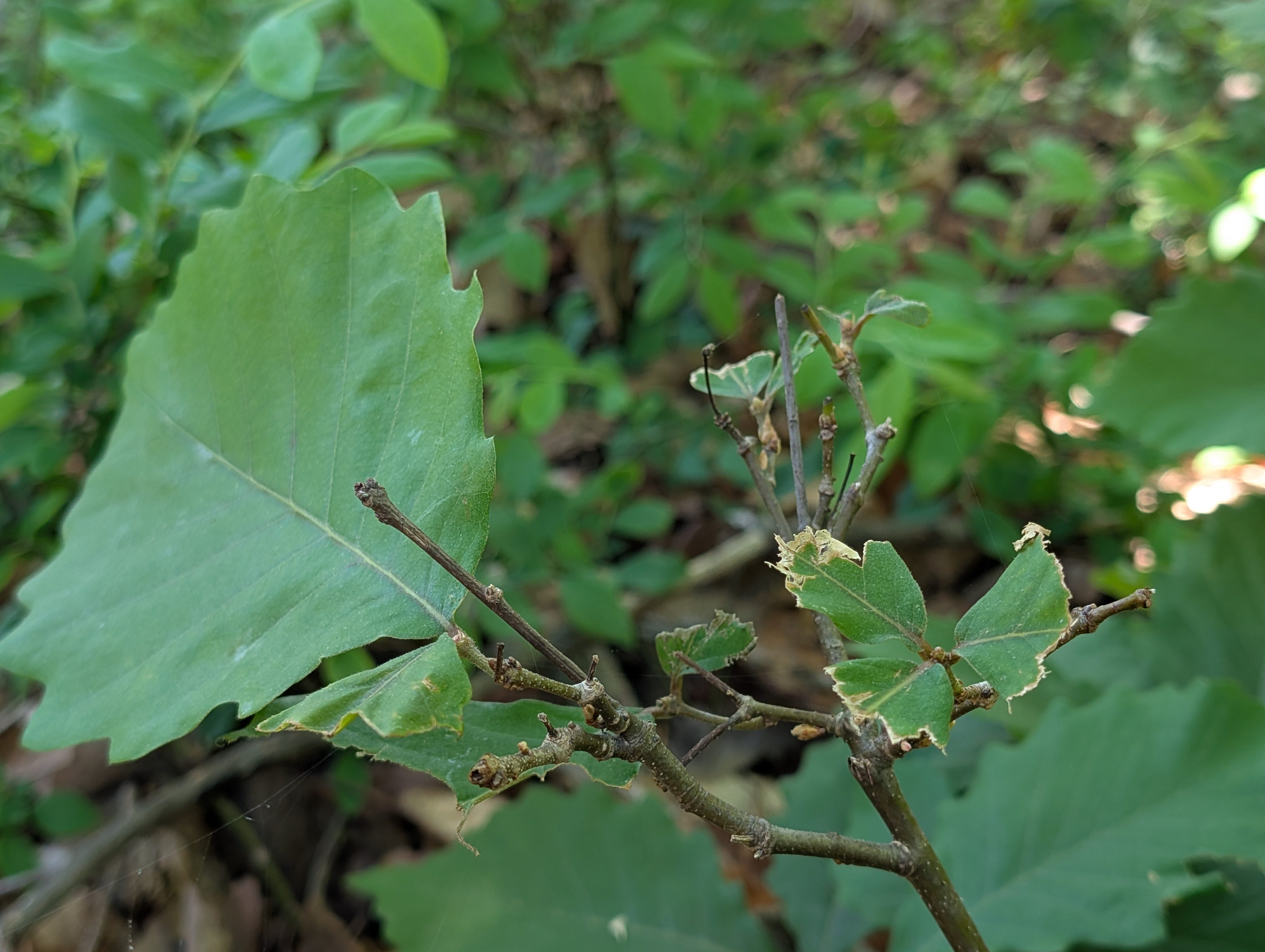
It’s not just that deer eat individual plants. They actually reshape entire plant communities over time with their browsing behavior. Deer, just like you and me, have their dietary preferences. They will go for species that are within easy reach, taste good, and are full of moisture and nutritional content. Because deer evolved with native plant species, they generally prefer natives over non-natives, or species that are close relatives of a preferred native plant. Additionally, when we place nursery-grown plants in the ground, they are often some of the first to be eaten by deer because they were given extra nutrients and water under professional propagation care. That makes them extra attractive to the deer.
Over time, this preferential deer browsing behavior means that native plants get repeatedly damaged and whittled down. Non-native species, particularly invasive species, take up more sunlight, moisture, and space. Before long, the landscape is full of more non-native plants and the native species decline. The plant community gets skewed due to the deer pressure.
In the dense shade under the trees in your yard, what this ends up looking like is a few straggly plants and a lot of bare ground or mulch. Or, a sea of some hardy invasive groundcover like periwinkle (Vinca minor), English ivy (Hedera helix), lilyturf (Liriope muscari), or Japanese spurge (Pachysandra terminalis).
In many Mid-Atlantic suburban landscapes, deer pressure changes the entire equation. A plant can be perfectly native, locally appropriate, pollinator-friendly, and aesthetically beautiful, and still fail repeatedly because deer preferentially eat it down to stubs.
This creates an uncomfortable reality for ecological gardeners. We may want maximum species diversity and a beautiful succession of flowers, but deer force us toward a narrower functional palette. If you want to be successful in a dry, shady area with a lot of deer, look for species that have:
deep shade tolerance
aromatic foliage
chemical defenses (like milky sap)
leathery or hairy leaves
colonial spreading behavior
deep root systems
drought tolerance
rapid recovery after browse
Meanwhile, many beloved woodland species decline unless they receive protection during establishment or are planted in unusually favorable microclimates.
The moral of the story is: Dry shade is not impossible to plant. It is simply highly selective.
In practice what that means is that you have to calibrate your expectations in line with reality. The truth is that deep, dry shady conditions will probably not give rise to the exuberant cottage garden look you hoped for. When light and moisture are limited, most plants don’t grow to be as big and fluffy as they would with more sun and water. And when animals tromp through, they very well might take the plants down a notch or three.
So, what to plant?
All sites are unique and microclimates make a difference. Nothing is guaranteed and you will always need to use some trial and error. However, you can be strategic in your trials by using careful observations of your site and understanding plant characteristics.
Here are a few species I personally love and recommend:
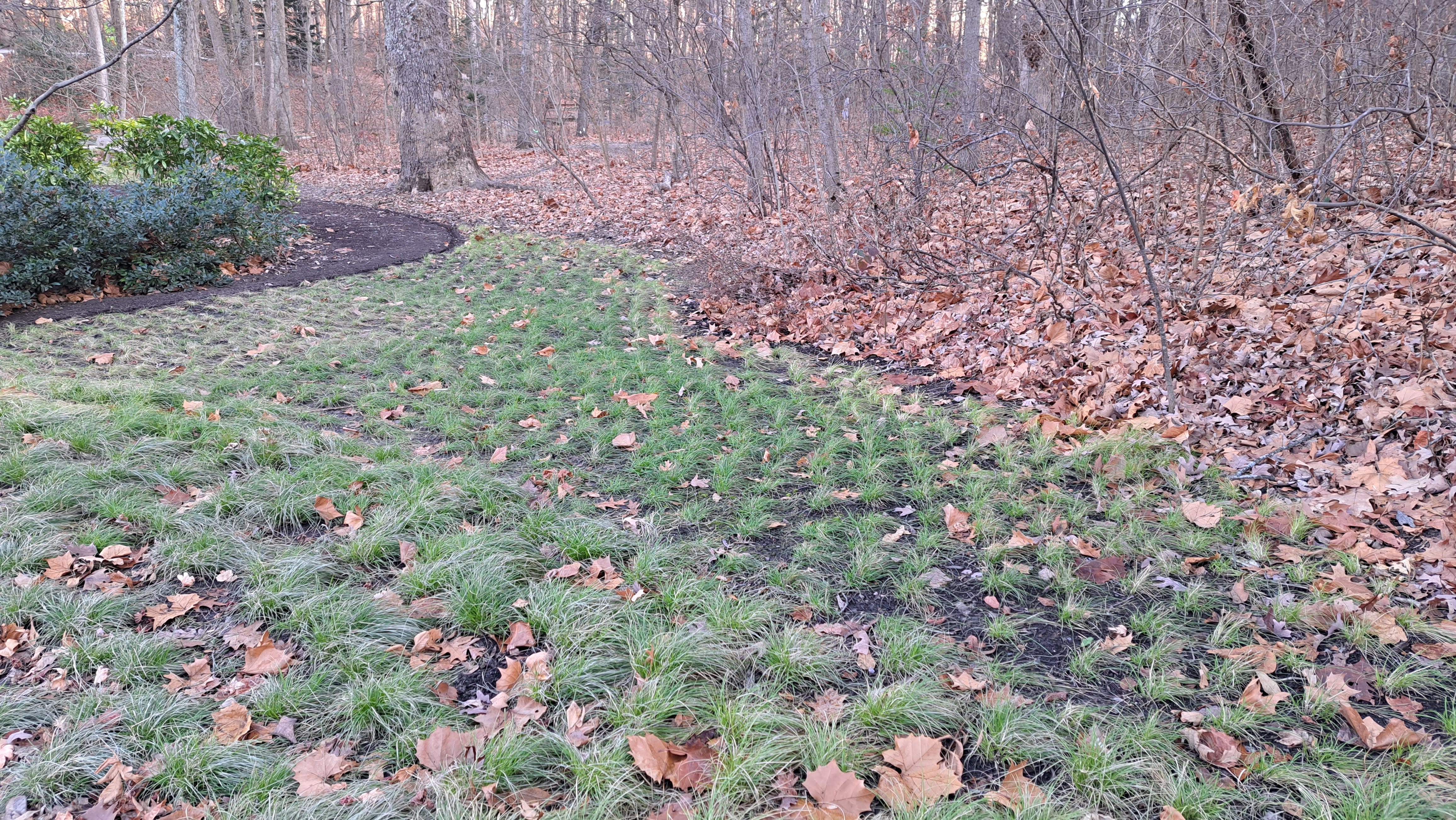
Pennsylvania sedge (Carex pensylvanica)
Really, it’s hard to go wrong with the tried and true Pennsylvania sedge. With its tufty-yet-flowing texture, it can withstand root competition, dry periods, and deer pressure better than many broadleaf species. It requires nearly zero care once it has been established. This is a backbone species in which you can plant larger specimens and seasonal interest plants.
Christmas fern (Polystichum acrostichoides)
This is one of a very, very few plants that I have never ever seen deer eat. Until last winter, I also would have put Juniperus spp. on that list, but then the deer came through hungry in February during a cold snap and devastated a whole slope planting of juniper shrubs, and that opened my eyes! But Christmas ferns motor through the year with evergreen foliage, interesting fiddleheads that unfurl in spring, and a predictable clumping habit. You can plant a matrix (loose grid) of these in a dry, shady area and they will have a great chance of establishing. Christmas ferns are clumping ferns, so they will not spread by runners and colonize an area. Where they are well established, the clumps will slowly expand, and new baby ferns are also produced through the ferns’ two-stage spore-based reproduction cycle. That is how they spread beyond the immediate perennial clump.
Heuchera (Heuchera spp.)
Heuchera, sometimes called coral bells or alumroot, are tough native perennial plants that call upon their hairy or fuzzy foliage and lack of succulent moisture to escape deer browsing. They have a nice mounded, ruffled texture and spikes of white or pink flowers that bloom in the summer. Two main species to try include Heuchera americana (American alumroot) and H. villosa (hairy alumroot), which has even larger leaves, blooms a bit later, and works well with heat and humidity. Heuchera is one tough plant, and it can definitely contribute to a successful dry shade planting where deer roam through.
A note on heuchera: this is one of the most commonly hybridized and highly selected species of garden plants. Many companies propagate heuchera via tissue culture techniques, which involves labs and test tubes and is as far from ecological horticulture as you can get. Heuchera has also been hybridized with Tiarella cordifolia (foamflower) to create Heucherella. And you will see umpteen dozen cultivars with different leaf color, bloom color, size, and leaf shape. So look for the straight species whenever possible if you want to promote genetic diversity and actual environmental resilience.
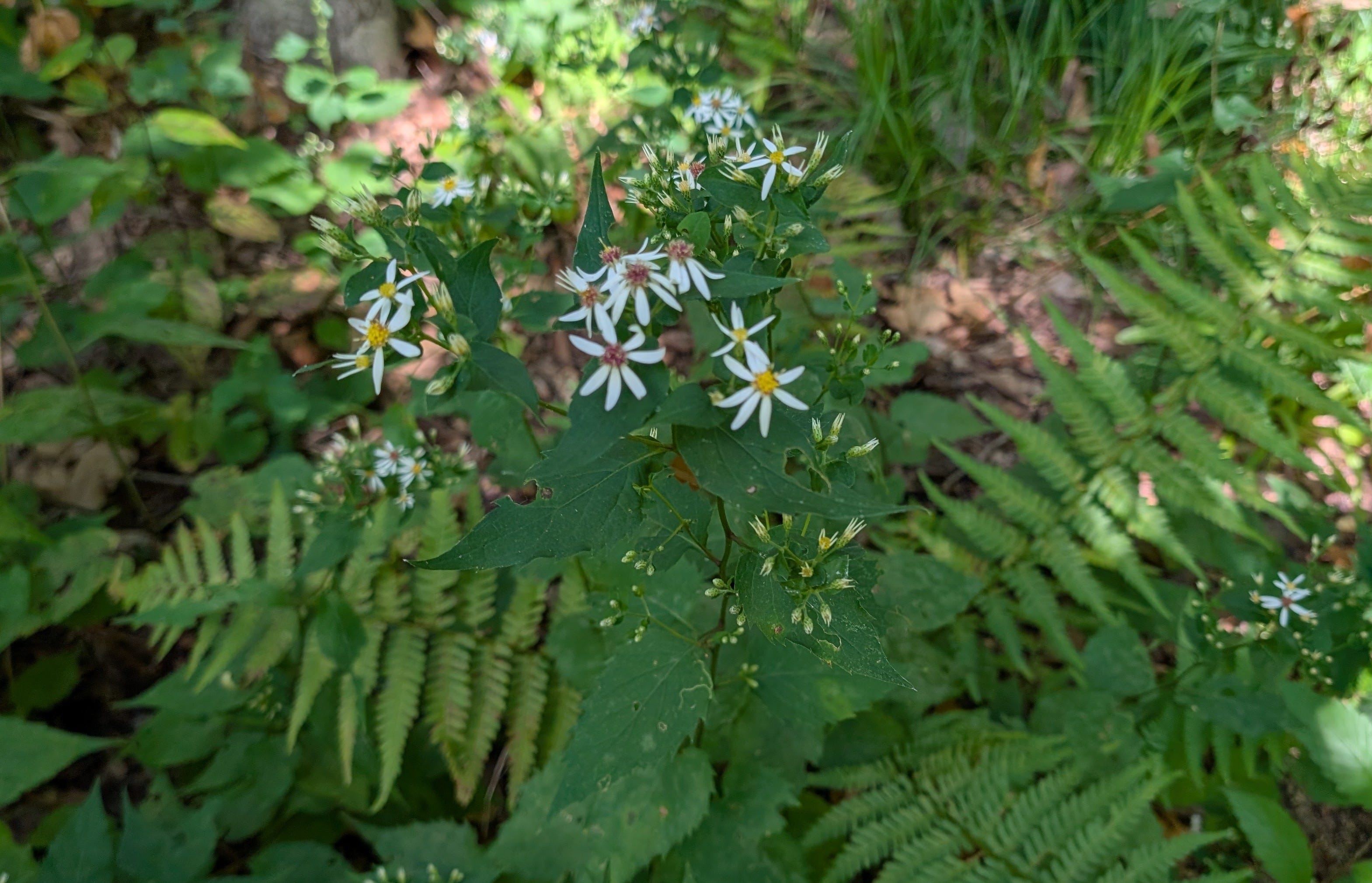
White wood aster (Eurybia divaricata)
White wood aster is a dependable choice for a colonizing perennial that works in dry shady conditions. It does spread rhizomatously and will weave in and out of your planting once it gets established. This plant resists heavy deer pressure with its aromatic and slightly leathery foliage, which is less palatable than other plants. Even when it does get browsed, it can resprout and carry on growing. The underground system of roots also gives the plant an energy store that allows it to keep popping up after disturbance. As its common name suggests, its natural habitat is in wooded areas, so it can tolerate shady conditions. Finally, white wood aster blooms in the fall and represents a key nectar and pollen source for late season insects. If that wasn’t enough, it is also the larval host plant for our crescent butterflies, the pearl crescent and northern crescent.
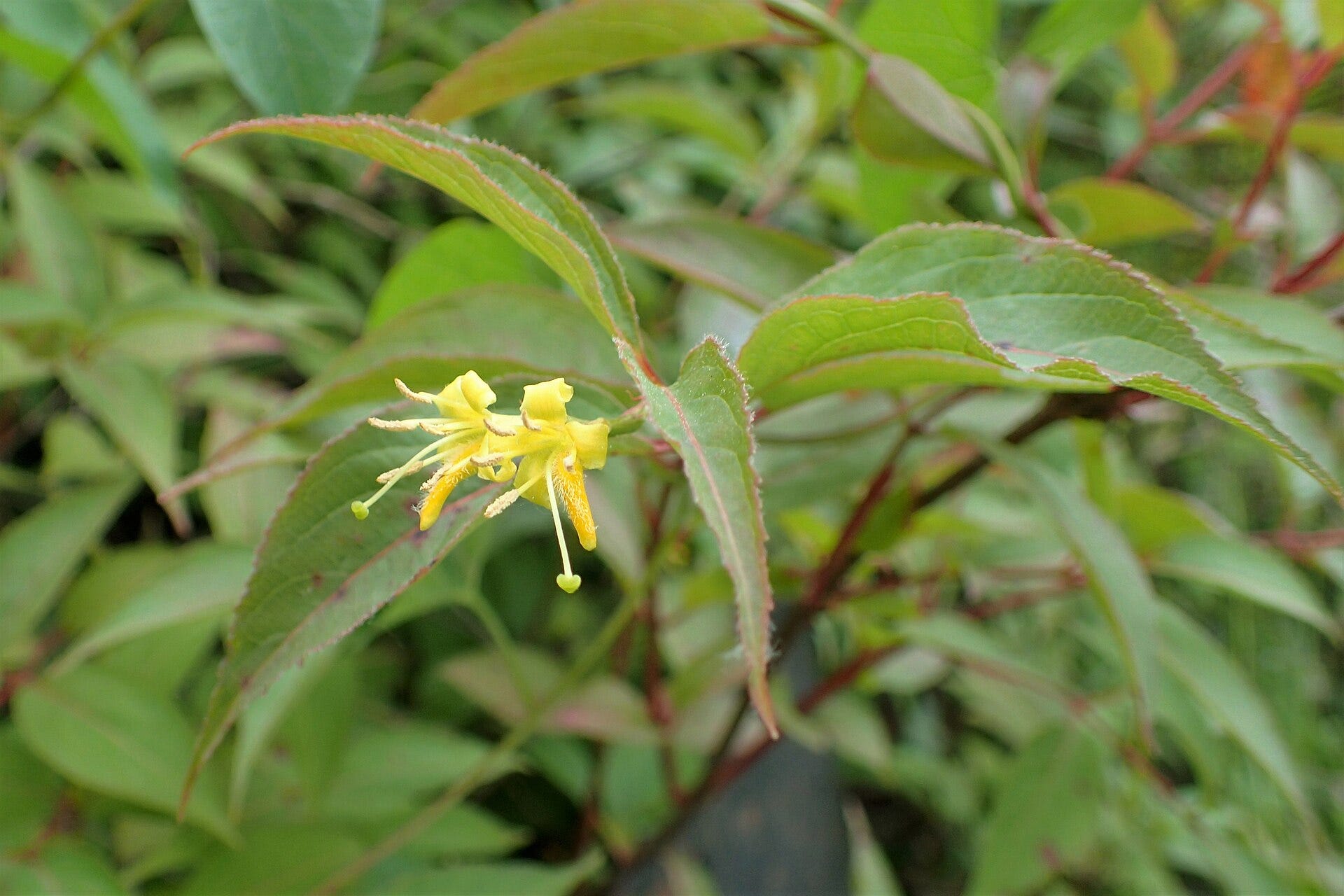
Northern bush honeysuckle (Diervilla lonicera)
Northern bush honeysuckle grows natively in the Appalachian mountains in Virginia, as well as more commonly throughout the northeast. This is our native bush honeysuckle, not to be confused with the ubiquitous and highly invasive bush honeysuckles like Lonicera mackii, L. morrowii, and L. tatarica. Our native bush honeysuckle is in its own genus and has yellow flowers. It’s more diminutive than the non-native species, growing up to only about four feet high. It is tough and adaptable to a range of conditions that do include dry shade, slopes, and different soil types. Deer tend not to eat it because of its tough leaves and bitter taste. This shrub will colonize in the right conditions, and can be pruned for form as desired. Northern bush honeysuckle acts as a host plant for the Laurel sphinx moth and the snowberry clearwing, a marvelous hummingbird moth!
Keys to successful dry shade gardening
Whenever I’m advising a client about how to be successful at gardening in dry, shady conditions, I emphasize the following points:
Learn to be okay with a limited plant palette - this is the biggest shift in thinking that saves people from repeated disappointments and throwing good money after bad. No amount of wishful thinking is going to make your echinacea a booming success amongst the shallow roots and dark shade of your maple tree. Deer WILL eat it. Right when it’s about to bloom and you have your hopes up. The truth about dry shade with deer is that you have to think strategically and be willing to use plants that are well-suited to the conditions. Making the right planting choices will give you a greater chance at creating a functioning garden.
Plant thickly - without much light and with limited moisture, plants (even when they can tolerate such conditions!) do not grow as vigorously. If you want your shady area to look fulsome with plenty of visual interest, you will need to plant many individuals, closer together than you might imagine. Plugs work best when planting amongst superficial tree roots, because you don’t have to dig such big holes while trying not to damage the tree roots. But you will need a lot of them. For herbaceous plants, aim for one plant every square foot or even more if they are small at maturity. Arrange them in a loose hexagonal or offset grid so that they will eventually touch and grow into one another a bit.
Be prepared to water consistently to get things established - I know we have been talking about dry shade, and yes, the conditions can get very droughty underneath a tree, especially in late summer and fall. However, your plants will still require a consistent application of water for the first 1-2 growing seasons in order to get established. Aim for the equivalent of about one inch of rain per week. If you get an inch of natural rain one week, you don’t need to water. These deep but less frequent waterings will allow your plants to develop strong, deep root systems so they can survive future dry spells.
A curated plant list for Mid-Atlantic gardeners
These are a few of my personal favorites, but I’ve evaluated many more species using the same lens. I made a downloadable spreadsheet that I use in my own coaching work. In this list, I’ve included over 50 species with:
botanical and common names,
bloom color and timing,
wildlife value,
deer resistance,
establishment reliability,
ecological function categories,
and composite performance scores.
You can download the spreadsheet from my website by clicking on the image or button below:

Final thoughts
Don’t believe that your dry shade area is impossible to plant!
It is simply extremely selective. So you need to plant accordingly and choose your species carefully. Don’t expect it to look like a bright cottage garden. You will need to adjust your expectations and aim for a soft, textured understory that provides soft landings for insects, shelter and food for birds and small mammals. It can certainly be aesthetically appealing, but depending on how severe your shade and deer pressure are, it might not be the visual highlight of your yard. And that is perfectly okay.
And if you’re local to Northern Virginia and you want live coaching help to figure out what would actually work in your specific yard, that’s exactly what I do. You can book a garden coaching session over on my website at www.itstartswithaleaf.com. I also offer virtual coaching sessions for folks who live farther away.
Thank you, Vanessa! Exactly my problem in North Carolina. I have not previously seen this put together so well anywhere else.
Lenten Roses are my go to for dry shade and deer resistance.